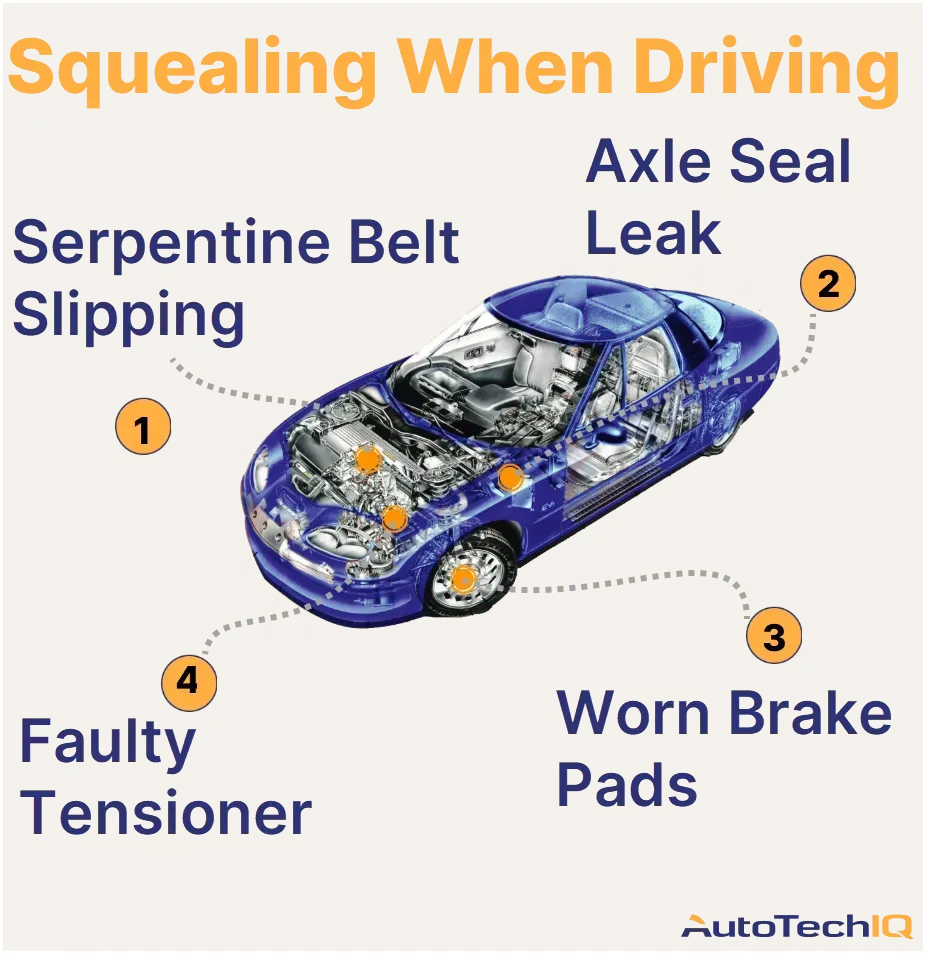
What Causes a Squealing Noise?
Squealing typically occurs when friction, slipping belts, worn bearings, or brake wear indicators create high-frequency vibration. The location and timing of the noise are key factors in determining the affected system.
For example, a squeal during braking often indicates worn brake pads, while squealing immediately after startup frequently points toward a worn serpentine belt or failing belt tensioner.
When Do You Hear the Squealing?
Select When the Squealing Occurs
Choose the condition that best matches your vehicle.
Select one of the squealing conditions above.
Components That Commonly Produce Squealing Noises
Worn Brake Pads
Brake wear indicators intentionally create a squealing sound to alert drivers that brake service is needed.
Serpentine Belt Wear
Cracked, glazed, stretched, or contaminated belts often squeal during startup or acceleration.
Belt Tensioner Failure
Weak tensioners allow the belt to slip, especially during cold starts or under heavy engine load.
Idler Pulley Bearings
Worn pulley bearings commonly create high-pitched squealing while the engine is running.
Power Steering Pump
Low power steering fluid or pump wear may produce squealing during steering maneuvers.
Alternator Bearings
Failing alternator bearings often create squealing or chirping noises before complete failure.
Wheel Bearings
Advanced wheel bearing wear may produce squealing before progressing into humming or grinding.
Brake Rotor Surface
Rust, glazing, or contamination can temporarily create brake squeal.
A/C Compressor
Compressor clutch or pulley bearing problems may create intermittent squealing.
Accessory Drive Components
Water pumps, pulleys, and other belt-driven accessories may squeal as bearings begin to wear.
When the Noise Occurs Helps Narrow the Diagnosis
Squealing While Braking
Usually indicates worn brake pads, glazed rotors, contaminated friction material, or sticking brake hardware.
Squealing During Startup
Most commonly caused by worn serpentine belts, belt tensioners, or accessory pulleys.
Squealing While Turning
Frequently caused by power steering pump problems, low power steering fluid, or steering drive belt issues.
Different Sounds Often Point to Different Systems
Squealing Noise
Squealing often comes from worn brake pads, a slipping serpentine belt, weak belt tensioners, accessory pulleys, or power steering components.
Grinding Noise
Grinding usually indicates metal-on-metal contact involving worn brakes, damaged wheel bearings, drivetrain components, or internal mechanical wear.
Clicking or Whining
Clicking may indicate CV axle, suspension, brake hardware, or starter problems, while whining often points toward power steering, transmission, alternator, or bearing issues.
Persistent Squealing Should Be Inspected Promptly
Squealing While Braking
Brake squeal may be an early warning that the brake pads are worn. Delaying service can allow the pads to wear through and damage the brake rotors.
Squealing From the Engine
A slipping or damaged serpentine belt can eventually break, causing loss of charging, cooling, power steering, or other belt-driven systems.
Squealing While Turning
Power steering pump or fluid problems may worsen and make the vehicle more difficult to steer, especially at low speeds.
How We Diagnose Squealing Noises
Noise Reproduction
We determine whether the squealing occurs during braking, startup, acceleration, steering, or normal driving.
Brake Inspection
Brake pads, rotors, calipers, hardware, and friction surfaces are checked for wear, glazing, contamination, or damage.
Belt Inspection
The serpentine belt is inspected for cracking, glazing, contamination, stretching, and improper alignment.
Pulley & Tensioner Testing
Belt tensioners, idler pulleys, alternator bearings, A/C compressor pulleys, and other accessory components are checked for roughness or excessive movement.
Steering System Inspection
Power steering fluid, pump operation, hoses, belt condition, and related steering components are evaluated when the noise occurs during turns.
Repair Verification
After repairs are completed, the vehicle is tested again under the same conditions to confirm the squealing noise is gone.