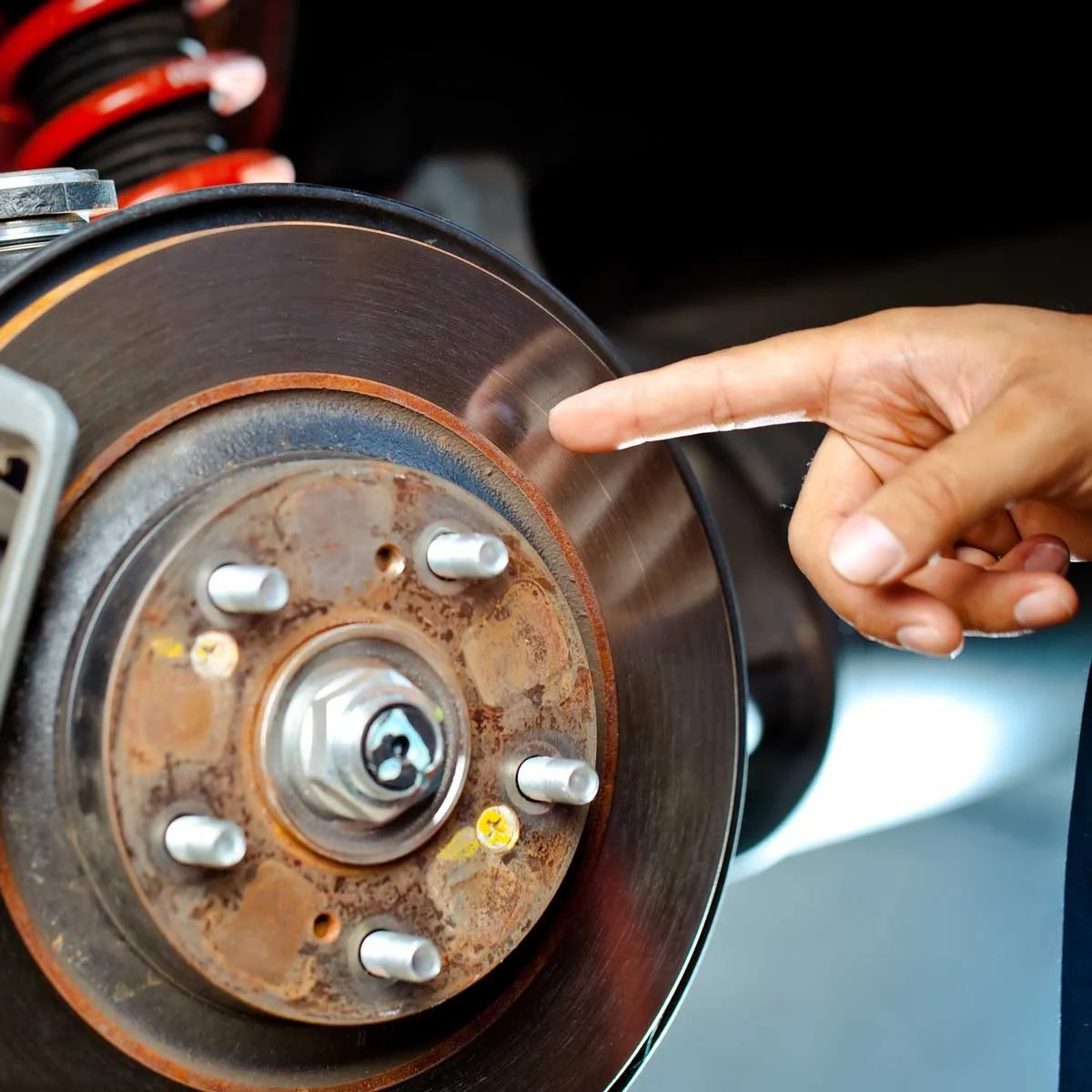
Why Are My Brakes Making a Grinding Noise?
Your braking system uses friction to slow and stop the vehicle. When you press the brake pedal, the brake pads clamp against the rotors. If the friction material has worn away, the metal backing plate may contact the rotor and create a loud grinding sound.
Grinding does not always mean the brake pads are completely worn out. Rust buildup, loose hardware, damaged dust shields, sticking calipers, wheel-bearing wear, or debris between the rotor and backing plate can produce similar noises.
The timing and location of the noise are important. Grinding only during braking often points toward brake friction components, while grinding that continues while driving may involve a wheel bearing, backing plate, axle, or another rotating component.
When Do You Hear the Grinding?
Select Your Brake Grinding Symptom
Choose the condition that most closely matches what you are experiencing.
Select one of the symptoms above.
What Usually Causes Grinding When Braking?
Completely Worn Brake Pads
Once the friction material is gone, the metal pad backing plate can grind directly against the brake rotor and reduce stopping performance.
Damaged Brake Rotors
Deep grooves, heat damage, heavy rust, cracking, or severe uneven wear can create grinding noises and brake-pedal pulsation.
Sticking Brake Caliper
A seized caliper piston or slide pin can keep a brake pad pressed against the rotor, causing rapid wear, heat, odor, and grinding.
Loose or Damaged Brake Hardware
Clips, shims, springs, and mounting hardware may shift or contact the rotor if they become loose, corroded, or improperly installed.
Bent Backing Plate or Dust Shield
A bent metal shield can rub against the brake rotor and create a scraping or grinding sound that may continue even without braking.
Debris Near the Rotor
Small stones, rust flakes, or road debris can become trapped between the rotor and backing plate, producing sudden grinding noises.
Wheel-Bearing Wear
A worn wheel bearing may create grinding, humming, or growling that changes with vehicle speed or while turning.
Parking-Brake Problems
Damaged parking-brake shoes, loose hardware, corrosion, or a partially engaged parking brake may create grinding from the rear wheels.
Grinding, Squealing, and Scraping Can Mean Different Things
Grinding
Often indicates severe brake-pad wear, metal-to-metal contact, rotor damage, a seized caliper, or another component contacting the rotor.
Squealing
May be caused by brake-wear indicators, glazed pads, vibration, moisture, brake dust, or the type of friction material used.
Scraping
Frequently points toward a bent dust shield, trapped debris, surface rust, loose hardware, or a dragging brake component.
Symptoms That May Accompany Brake Grinding
Longer Stopping Distance
Severely worn pads or damaged rotors may reduce braking effectiveness and require more distance to stop.
Brake-Pedal Pulsation
A pulsating pedal commonly indicates rotor-thickness variation, excessive runout, or looseness in the hub assembly.
Vehicle Pulls While Braking
Uneven brake application, a sticking caliper, contaminated pads, or hydraulic problems may cause the vehicle to pull.
Burning Smell or Excessive Heat
A seized caliper or dragging brake may overheat the wheel, rotor, pads, and nearby components.
Brake Warning Light
Low brake fluid, worn brake pads, hydraulic faults, or electronic brake-system problems may trigger a dashboard warning.
Steering-Wheel Vibration
Front rotor problems, loose wheel bearings, tire issues, or worn suspension components may cause steering-wheel shake during braking.
Brake Grinding Should Never Be Ignored
Temporary Surface Rust
Light grinding after rain or overnight parking may simply be surface rust on the brake rotors and often disappears after a few normal stops.
Schedule an Inspection Soon
Grinding that occurs every time you brake usually indicates brake wear or damaged components that should be repaired before additional damage occurs.
Stop Driving Immediately
Loud metal-on-metal grinding, reduced braking performance, burning smells, brake warning lights, or severe vibration require immediate inspection.
How We Find the Source of Brake Grinding
Road Test
We duplicate the grinding noise while evaluating braking performance, steering feel, pedal pulsation, and stopping distance.
Brake Inspection
Brake pads, rotors, calipers, hardware, brake hoses, and parking-brake components are carefully inspected.
Rotor Measurements
Rotor thickness, runout, heat damage, and surface condition are measured to determine whether resurfacing or replacement is needed.
Suspension & Wheel Inspection
Wheel bearings, hubs, steering components, and suspension parts are inspected for wear that may contribute to brake noise.
Hydraulic System Inspection
Brake-fluid condition, caliper operation, brake hoses, and hydraulic performance are checked for proper braking function.
Final Road Test
After repairs, the vehicle is road tested to verify quiet, smooth braking and proper stopping performance.