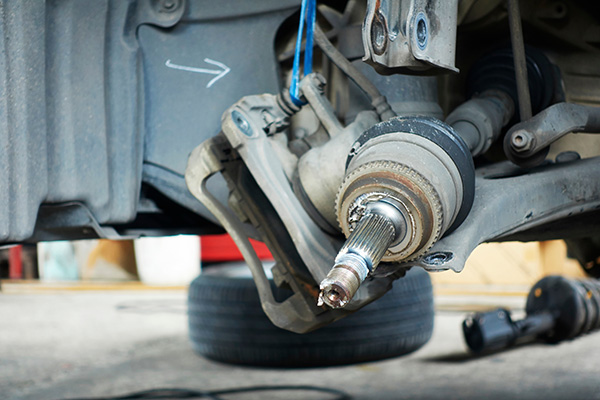
What Causes Clicking Noises?
Clicking noises usually develop as components begin wearing or lose proper lubrication. Depending on the affected system, the sound may be slow and rhythmic, rapid and repetitive, or only occur during certain driving conditions.
A clicking sound while turning often points toward worn CV joints, while clicking during engine operation may indicate valve train components or low engine oil. Clicking during startup frequently involves the battery, starter motor, or starter solenoid.
When Do You Hear the Clicking?
Select When the Clicking Noise Occurs
Choose the condition that best matches your vehicle.
Select one of the clicking noise conditions above.
Components That Commonly Produce Clicking Noises
Worn CV Joints
The most common cause of clicking while turning, especially during sharp left or right turns.
Loose Brake Hardware
Anti-rattle clips, brake pads, or caliper hardware may shift slightly and create clicking sounds.
Wheel Bearing Wear
Although wheel bearings usually hum or growl, advanced wear may also create intermittent clicking.
Suspension Components
Ball joints, sway bar links, tie rods, and bushings may click while driving over uneven roads.
Valve Train Components
Lifters, rocker arms, or valves may produce rhythmic clicking during engine operation.
Low Engine Oil
Low oil level or poor lubrication may allow valve train components to click.
Starter Motor
Rapid clicking during startup commonly indicates insufficient battery voltage or starter circuit problems.
Loose Heat Shields
Exhaust heat shields may click as they vibrate or expand with engine temperature.
Differential Wear
Internal drivetrain wear may create clicking during acceleration or deceleration.
Foreign Objects
Rocks or debris caught near rotating components may create a repetitive clicking sound.
When the Noise Occurs Helps Identify the Cause
Clicking While Turning
Most commonly indicates worn CV joints or damaged axle assemblies.
Rapid Clicking During Startup
Often caused by a weak battery, poor electrical connections, or starter motor problems.
Engine Clicking
May indicate low oil level, valve train wear, or internal engine components requiring inspection.
Different Noises Often Point to Different Problems
Clicking Noise
Clicking usually comes from worn CV joints, suspension components, brake hardware, starter systems, or valve train components depending on when the sound occurs.
Grinding Noise
Grinding commonly indicates metal-on-metal contact from worn brake components, wheel bearings, drivetrain parts, or transmission damage.
Knocking or Ticking
Knocking often originates inside the engine or suspension, while rhythmic ticking usually points toward valve train or lubrication issues.
It Depends on the Source of the Clicking
Clicking While Turning
A worn CV joint can eventually fail completely, potentially leaving the vehicle unable to move. Schedule an inspection as soon as possible.
Rapid Clicking During Startup
This is often caused by a weak battery or starter circuit problem. While it may not damage the engine, the vehicle may eventually fail to start.
Engine Clicking
Clicking from the engine may indicate low oil pressure or internal wear. Continued driving without diagnosis can lead to expensive engine damage.
How We Diagnose Clicking Noises
Road Test
We reproduce the clicking noise under various driving conditions to identify exactly when it occurs.
Steering & Suspension Inspection
CV axles, tie rods, sway bar links, ball joints, and control arms are inspected for wear or looseness.
Brake Inspection
Brake pads, hardware, rotors, calipers, and backing plates are inspected for movement or abnormal wear.
Engine Inspection
Engine oil level, valve train components, accessory pulleys, and timing components are evaluated if the clicking originates from the engine.
Electrical System Testing
Battery condition, starter motor, charging system, and starter relay are tested if the clicking occurs during startup.
Repair Verification
After repairs are completed, we perform a final road test to verify the clicking noise has been eliminated.