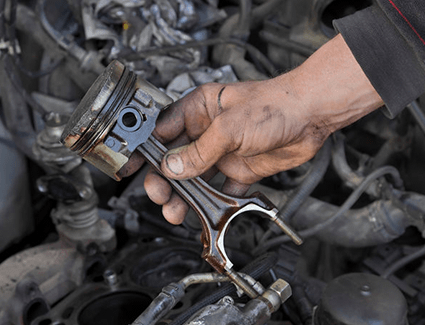
What Causes a Knocking Noise?
Knocking noises usually occur when components move beyond their normal operating clearance or when metal parts strike one another. The sound may originate from the engine, suspension, steering, drivetrain, or body components.
For example, knocking during acceleration may indicate engine detonation or worn rod bearings, while knocking over bumps commonly points toward suspension or steering components. Identifying when the noise occurs is often the first step toward an accurate diagnosis.
When Do You Hear the Knocking?
Select When the Knocking Occurs
Choose the condition that best matches your vehicle.
Select one of the knocking conditions above.
Components That Commonly Produce Knocking Noises
Engine Detonation (Spark Knock)
Improper combustion caused by low-octane fuel, carbon buildup, or ignition timing issues may produce knocking during acceleration.
Rod Bearings
Worn connecting rod bearings can produce deep metallic knocking that becomes louder under engine load.
Low Engine Oil
Insufficient lubrication accelerates wear and may allow engine components to knock together.
Motor Mounts
Broken or worn engine mounts allow excessive engine movement, causing knocking during acceleration or shifting.
Suspension Components
Worn sway bar links, ball joints, control arms, or bushings often knock over bumps.
Struts & Shocks
Damaged struts or loose mounting hardware commonly create knocking over uneven pavement.
CV Axles
Damaged CV joints may knock or click during turns and acceleration.
Loose Exhaust Components
Exhaust pipes, catalytic converters, or heat shields may strike the chassis and create knocking sounds.
Drivetrain Wear
Worn universal joints, differentials, or driveshaft components may create knocking under load.
Piston Slap
Some engines develop piston slap when cold, producing temporary knocking that often decreases as the engine warms.
When the Noise Occurs Helps Narrow the Diagnosis
Knocking During Acceleration
Often associated with engine detonation, rod bearings, motor mounts, or drivetrain components.
Knocking Over Bumps
Usually points toward worn suspension, steering, or chassis components.
Knocking At Idle
May indicate engine lubrication problems, internal engine wear, or accessory drive components.
Different Noises Often Point to Different Systems
Knocking Noise
Knocking commonly indicates excessive clearance between moving components. Engine internals, suspension parts, motor mounts, and drivetrain components are frequent sources.
Ticking Noise
Ticking is typically faster and lighter than knocking and is often associated with valve train components, fuel injectors, or low engine oil.
Clicking or Grinding
Clicking usually comes from CV joints or suspension components, while grinding typically indicates metal-on-metal contact from brakes, wheel bearings, or drivetrain failures.
Some Knocking Noises Require Immediate Attention
Engine Knock
Persistent engine knocking should never be ignored. Continuing to drive may result in catastrophic engine damage and significantly more expensive repairs.
Suspension Knock
Suspension components that produce knocking may affect steering stability, braking performance, and overall vehicle safety if left unrepaired.
Drivetrain Knock
Knocking during acceleration or shifting may indicate drivetrain or motor mount problems that should be diagnosed promptly before additional components are damaged.
How We Diagnose Knocking Noises
Road Test
We duplicate the knocking under controlled driving conditions to determine exactly when and where the sound occurs.
Engine Inspection
Engine oil level, oil pressure, ignition timing, valve train, and internal engine components are evaluated when engine knock is suspected.
Suspension & Steering Inspection
Ball joints, control arms, sway bar links, bushings, struts, shocks, and steering components are inspected for excessive movement or wear.
Motor Mount Evaluation
Engine and transmission mounts are inspected for separation, cracking, or excessive movement under load.
Drivetrain Inspection
CV axles, driveshafts, universal joints, differential components, and transmission mounts are evaluated when the noise occurs during acceleration.
Repair Verification
After repairs are completed, the vehicle is road tested again to confirm the knocking noise has been eliminated.