Why Is My Engine Misfiring?
Every cylinder in your engine requires the correct amount of fuel, sufficient compression, proper ignition spark, and accurate engine timing. When any of these elements are missing or incorrect, the cylinder may misfire. Modern vehicles detect misfires using crankshaft speed sensors and store diagnostic trouble codes that help technicians identify the affected cylinder.
While worn spark plugs are one of the most common causes, misfires can also result from ignition coils, fuel injectors, vacuum leaks, engine compression problems, timing issues, or faulty sensors. Proper testing is essential before replacing parts.
Which Symptoms Are You Experiencing?
Select Your Misfire Symptom
Choose the symptom that best matches your vehicle.
Select a symptom above.
What Usually Causes Engine Misfires?
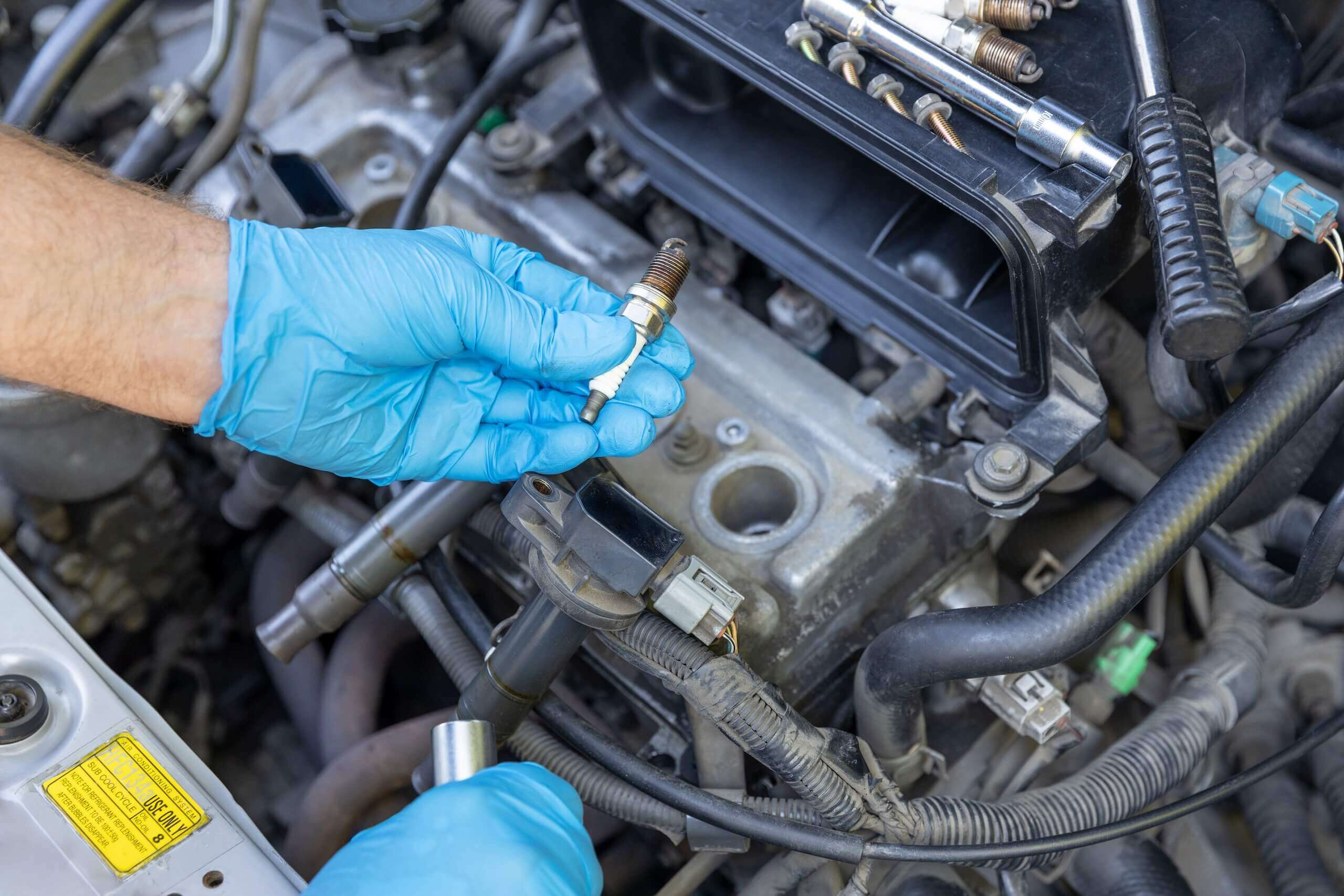
Worn Spark Plugs
Spark plugs wear over time and eventually fail to ignite the air-fuel mixture efficiently, causing rough running and cylinder misfires.
Failed Ignition Coils
A faulty ignition coil cannot produce sufficient spark for combustion and is one of the most common causes of modern engine misfires.
Fuel Injector Problems
Clogged or malfunctioning injectors may prevent enough fuel from reaching one or more cylinders.
Vacuum Leaks
Unmetered air entering the engine creates a lean fuel mixture that can lead to rough idle and cylinder misfires.
Low Engine Compression
Burned valves, worn piston rings, damaged head gaskets, or internal engine wear may reduce compression and prevent proper combustion.
Timing Problems
Incorrect valve timing caused by worn timing components or stretched timing chains can affect combustion timing.
Sensor Failures
Crankshaft, camshaft, MAF, MAP, oxygen sensors, or throttle position sensors can all contribute to engine misfires.
Fuel Delivery Problems
Weak fuel pumps, clogged fuel filters, contaminated fuel, or low fuel pressure may create lean conditions and misfires.
Some Engine Misfires Can Cause Expensive Damage
Minor Misfire
A slight rough idle without warning lights may allow limited driving, but the problem should be diagnosed as soon as possible.
Drive With Caution
If the Check Engine Light is illuminated, power is reduced, or the engine hesitates during acceleration, schedule service immediately to prevent additional damage.
Stop Driving Immediately
A flashing Check Engine Light indicates an active misfire that can quickly damage the catalytic converter. Continuing to drive may result in expensive repairs.
Understanding Engine Misfire Codes
Random Misfire
Multiple cylinders are misfiring. Common causes include fuel delivery problems, ignition failures, vacuum leaks, or engine timing issues.
Single Cylinder Misfire
These codes identify a specific cylinder experiencing combustion problems due to spark, fuel, compression, or injector issues.
Fuel & Ignition
Oxygen sensor, fuel trim, crankshaft sensor, camshaft sensor, injector, and ignition system codes often accompany engine misfires.
How We Diagnose Engine Misfires
Computer Diagnostics
Factory-level scan tools identify diagnostic trouble codes, freeze-frame data, and live engine information.
Ignition System Testing
Spark plugs, ignition coils, ignition wiring, and related components are inspected and tested.
Fuel System Testing
Fuel pressure, injectors, injector pulse, and fuel delivery are evaluated.
Engine Mechanical Testing
Compression, leak-down testing, and valve timing checks help identify internal engine problems.
Sensor Evaluation
Crankshaft, camshaft, oxygen, MAF, MAP, and throttle position sensors are inspected using live data.
Repair Verification
After repairs, the engine is road tested and monitored to ensure all cylinders are firing properly.