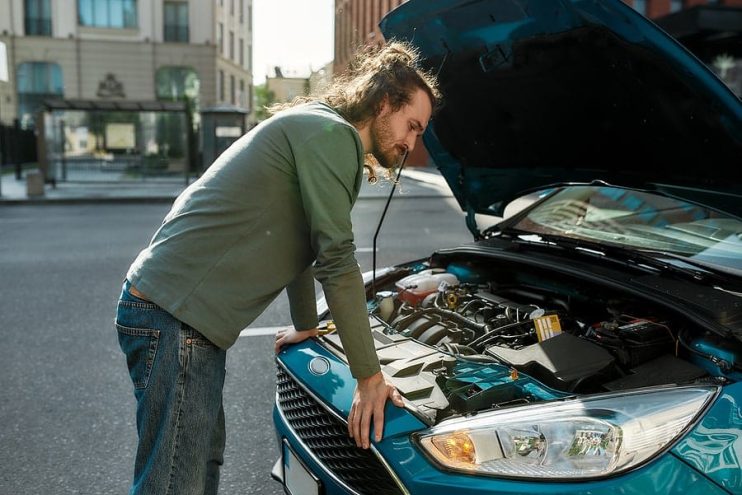
Why Does My Engine Keep Stalling?
An engine stall occurs when combustion unexpectedly stops and the engine shuts off. Depending on the cause, the engine may restart immediately, require several attempts, or refuse to restart at all.
Some vehicles stall only while idling, others stall while slowing for a stop, during acceleration, after refueling, or while cruising at highway speeds. Identifying exactly when the engine stalls provides valuable information during diagnosis.
Since numerous systems work together to keep an engine running, professional testing is the fastest way to identify the root cause and prevent repeat failures.
When Does Your Engine Stall?
Select Your Stalling Condition
Choose the situation that best matches your vehicle.
Select one of the symptoms above.
What Usually Causes Engine Stalling?
Fuel Pump Problems
A weak or failing fuel pump may interrupt fuel delivery and cause the engine to stall unexpectedly.
Crankshaft Position Sensor
Intermittent crankshaft sensor failures commonly shut off spark and fuel injector operation without warning.
Dirty Throttle Body
Carbon buildup may restrict airflow and prevent the engine from maintaining idle speed.
Ignition Problems
Worn spark plugs, ignition coils, or ignition modules may cause intermittent engine shutdown.
Alternator or Charging Problems
If the charging system fails, battery voltage eventually drops below the level needed to keep the engine running.
Mass Airflow Sensor
Incorrect airflow information may cause unstable fuel delivery, especially during idle.
Vacuum Leaks
Air leaks entering the intake system may upset the air-fuel mixture and cause unstable idle.
Electronic Throttle Control
Modern electronic throttle systems may reduce airflow or shut down engine operation when faults are detected.
Fuel Injector Problems
Dirty or failing injectors may interrupt proper fuel delivery under certain operating conditions.
Engine Control Module Issues
Electrical or computer-related faults may occasionally interrupt engine operation.
When the Engine Stalls Helps Identify the Cause
Only at Idle
Dirty throttle bodies, vacuum leaks, idle-control problems, and airflow sensor issues commonly affect idle quality.
Only While Driving
Fuel pumps, crankshaft sensors, charging-system failures, ignition faults, or intermittent electrical problems become more likely.
Randomly
Intermittent sensors, loose electrical connections, failing relays, or engine management faults may produce difficult-to- duplicate stalling conditions.
Similar Symptoms Can Point to Different Problems
Engine Stalling
The engine is already running and then shuts off unexpectedly. It may restart immediately, restart after cooling down, or remain difficult to start.
Engine Misfire
The engine continues running, but one or more cylinders fail to combust properly. The vehicle may shake, hesitate, lose power, or illuminate the Check Engine Light.
No-Start Condition
The engine either does not crank or cranks without starting. Battery, starter, fuel, ignition, sensor, timing, or anti-theft problems may be responsible.
An Engine That Stalls Can Create a Serious Safety Risk
Schedule Service Immediately
Even if the engine restarts and appears to drive normally, unexpected stalling should be diagnosed promptly because the condition may return without warning.
Use Extreme Caution
Stalling at intersections, during turns, in traffic, or while merging can reduce power steering and braking assistance and make the vehicle difficult to control.
Stop Driving
Do not continue driving if the engine repeatedly stalls, cannot restart reliably, loses electrical power, smells strongly of fuel, overheats, or displays a flashing Check Engine Light.
How We Diagnose Engine Stalling
Stalling-Condition Review
We document whether the engine stalls while idling, stopping, accelerating, cruising, starting, refueling, or after reaching operating temperature.
Computer Diagnostics
Trouble codes, freeze-frame data, fuel trims, engine RPM, throttle position, airflow readings, sensor signals, and charging voltage are reviewed.
Fuel-System Testing
Fuel pressure, pump volume, pressure retention, relay operation, injector performance, and electrical supply are tested.
Ignition & Sensor Testing
Spark plugs, ignition coils, crankshaft sensors, camshaft sensors, wiring, relays, and engine-speed signals are evaluated.
Airflow & Idle Inspection
The throttle body, intake system, vacuum hoses, airflow sensors, idle operation, and electronic throttle controls are inspected.
Road Test & Verification
The vehicle is tested under the conditions that originally caused the stall, and repairs are verified through live data analysis and repeated restart testing.