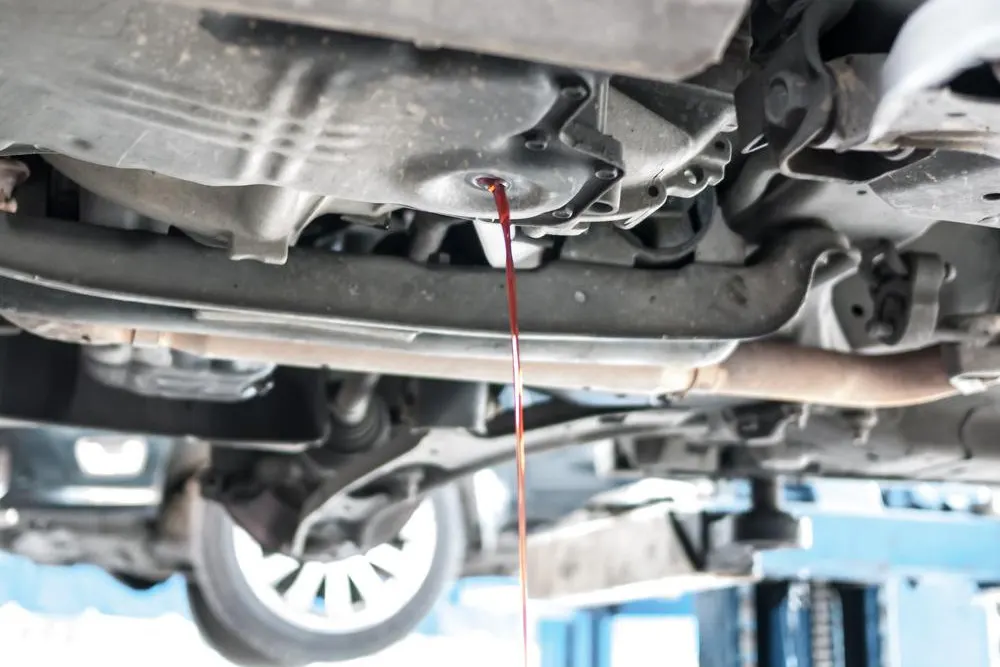
What Causes A Transmission Fluid Leak?
Transmission fluid circulates through the transmission under pressure and travels through multiple seals, gaskets, fittings, cooler lines, and internal passages. As these components age, they can crack, harden, loosen, or wear out, allowing fluid to escape.
The location, color, amount, and timing of the leak help identify which transmission component has failed.
Which Best Matches Your Vehicle?
Select Your Transmission Leak
Choose the condition that best matches your vehicle.
Select one of the transmission leak conditions above.
Where Transmission Fluid Leaks Usually Start
Transmission Pan Gasket
The most common external transmission fluid leak source.
Transmission Cooler Lines
Rubber hoses and metal lines can crack or loosen over time.
Input Shaft Seal
Fluid may leak from the front of the transmission near the engine.
Output Shaft Seal
Leaks commonly appear near the driveshaft or axle area.
Torque Converter Seal
Fluid may leak inside the transmission bell housing.
Transmission Case Damage
Cracks or impact damage can allow fluid to escape.
Axle Seals
Front-wheel-drive vehicles commonly leak from worn axle seals.
Loose Drain Plug Or Bolts
Improperly tightened hardware may create slow leaks.
Overfilled Transmission
Excess fluid may vent or leak under pressure.
Internal Seal Failure
Internal seal deterioration may eventually lead to pressure loss and shifting problems.
Different Leak Locations Often Point To Different Repairs
Front Of Transmission
Often associated with the torque converter seal, front pump seal, or input shaft seal.
Center Of Transmission
Frequently caused by a transmission pan gasket, loose bolts, damaged pan, or transmission cooler line fittings.
Rear Of Transmission
Commonly caused by output shaft seals, extension housing seals, or axle seals depending on the drivetrain configuration.
A Transmission Fluid Leak Should Be Repaired As Soon As Possible
Small Seep
A minor seep may not immediately affect transmission operation, but fluid levels should be monitored closely. Even a slow leak can eventually cause shifting problems and internal wear.
Active Fluid Leak
If transmission fluid is actively dripping onto the ground, avoid unnecessary driving. Low fluid can quickly lead to slipping, overheating, and expensive transmission damage.
Heavy Leak
If a large amount of transmission fluid has leaked or the vehicle will no longer shift properly, do not continue driving. The transmission may suffer severe internal damage without adequate lubrication.
Schedule Service Immediately If:
How We Diagnose Transmission Fluid Leaks
Visual Leak Inspection
We inspect the transmission, pan, cooler lines, seals, fittings, and surrounding components to locate the source of the leak.
Transmission Fluid Inspection
Fluid level, color, odor, and contamination are checked to determine whether additional transmission damage has occurred.
Leak Source Verification
Dye testing or cleaning procedures may be used to accurately identify the exact leak location when necessary.
Computer Diagnostics
We scan the transmission control module for fault codes that may have resulted from low hydraulic pressure or transmission performance issues.
Transmission Performance Test
We evaluate shift quality, engagement, and transmission operation after confirming proper fluid level.
Repair Verification
Following repairs, we verify that the leak has been eliminated and confirm proper transmission operation during a final road test.