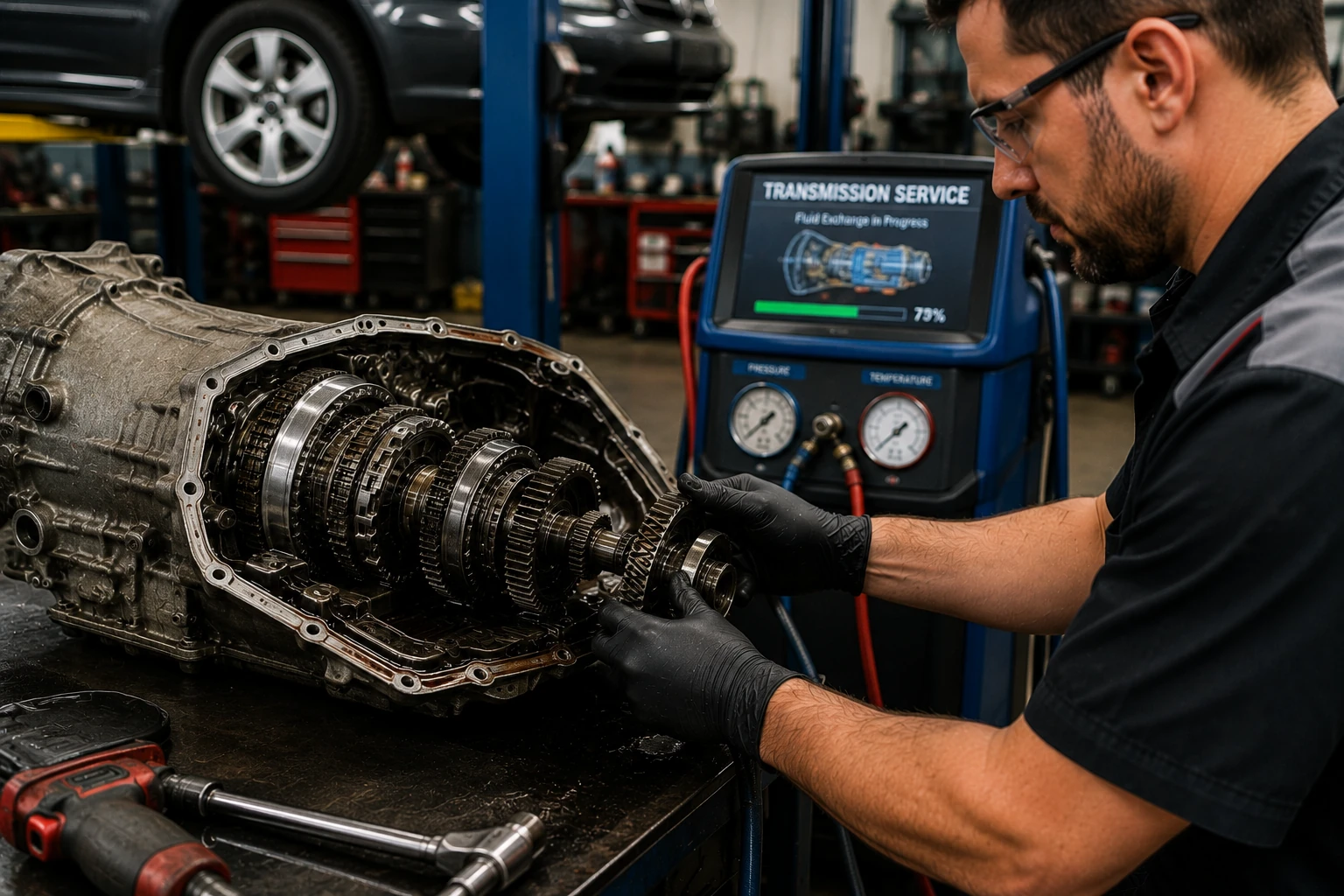
What Causes Transmission Noise?
Your transmission contains dozens of precision-machined gears, bearings, clutch packs, hydraulic components, and electronic controls. As these components wear or lose lubrication, they can begin producing unusual noises that change with vehicle speed, engine RPM, or gear selection.
Determining whether the noise occurs while accelerating, shifting, coasting, turning, or idling is one of the fastest ways to narrow down the cause.
Which Noise Sounds Most Like Yours?
Select Your Transmission Noise
Choose the sound that best matches your vehicle.
Select one of the transmission noises above.
Why Is My Transmission Making Noise?
Low Transmission Fluid
Insufficient lubrication causes whining and hydraulic pump noise.
Old Transmission Fluid
Contaminated fluid accelerates internal wear and increases noise.
Bearing Wear
Worn bearings commonly produce humming, growling, or whining sounds.
Gear Damage
Damaged gears often create grinding or whining noises.
Torque Converter Problems
Torque converter wear may produce whining or rattling noises.
Valve Body Problems
Hydraulic valve issues may create abnormal transmission sounds.
Internal Clutch Wear
Damaged clutch packs can create grinding or rattling noises.
Transmission Mount Failure
Loose mounts often produce clunking during gear changes.
Drivetrain Components
CV axles, driveshafts, and differentials can mimic transmission noise.
Internal Transmission Damage
Advanced wear can produce multiple noises that worsen over time.
The Type Of Noise Helps Narrow Down The Cause
Whining Or Humming
Often caused by low transmission fluid, hydraulic pump issues, or worn bearings.
Grinding Or Growling
Usually indicates internal gear wear, damaged bearings, or clutch pack problems requiring prompt inspection.
Clunking Or Rattling
Transmission mounts, drivetrain components, or internal transmission wear should be inspected before further damage occurs.
Transmission Noise Should Never Be Ignored
Light Whining Only
A faint whining sound may be caused by low or aging transmission fluid, but it should still be inspected before additional wear develops.
Grinding Or Growling
Grinding or growling noises often indicate bearing, gear, or internal transmission damage. Continued driving may rapidly increase repair costs.
Loud Clunking Or Metal Noise
Loud metallic noises, repeated clunks, or severe grinding may indicate major internal failure. Stop driving and have the vehicle inspected immediately.
Schedule Service Immediately If:
How We Diagnose Transmission Noise
Computer Diagnostics
We scan the transmission control module for fault codes, electronic failures, and shift abnormalities.
Transmission Fluid Inspection
Fluid level, condition, contamination, and metal debris are inspected to identify internal transmission wear.
Road Test
We determine exactly when the noise occurs during acceleration, shifting, cruising, deceleration, and idle.
Hydraulic & Mechanical Evaluation
Bearings, gears, valve body operation, torque converter, and hydraulic performance are evaluated.
Drivetrain Inspection
Driveshafts, CV axles, wheel bearings, differentials, and transmission mounts are inspected to eliminate similar noises.
Repair Verification
After repairs, the vehicle is road tested again to verify quiet, smooth transmission operation.