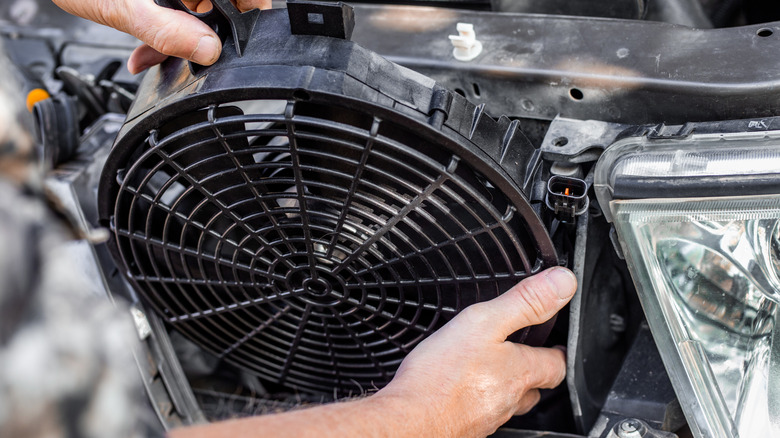
What Causes a Radiator Cooling Fan to Stop Working?
Electric radiator fans automatically switch on when engine temperatures rise or when the air conditioning requires additional airflow across the condenser. If the fan fails to operate correctly, temperatures can increase rapidly—particularly during stop-and-go driving.
The exact symptom—whether the fan never comes on, stays on all the time, or only works intermittently—helps narrow down the source of the problem.
Which Best Matches Your Vehicle?
Select Your Cooling Fan Symptom
Choose the condition that best matches your vehicle.
Select one of the cooling fan symptoms above.
Why Isn't the Cooling Fan Working?
Failed Cooling Fan Motor
The electric motor eventually wears out and stops operating.
Cooling Fan Relay Failure
A faulty relay prevents power from reaching the fan motor.
Blown Fuse
An overloaded circuit or failing motor may blow the cooling fan fuse.
Coolant Temperature Sensor
An inaccurate sensor may fail to command the cooling fan on.
Wiring Problems
Damaged wiring or corroded electrical connectors interrupt fan operation.
Cooling Fan Control Module
Electronic control failures can prevent proper fan operation.
Damaged Fan Blades
Broken blades reduce airflow and often create excessive noise.
Electrical System Problems
Charging system or voltage issues can affect cooling fan performance.
PCM Communication Issues
The engine computer may fail to command proper cooling fan operation.
Multiple Cooling System Faults
Cooling fan problems may occur together with thermostat or coolant circulation failures.
Different Fan Symptoms Usually Point to Different Repairs
Never Turns On
Failed motors, relays, fuses, or temperature sensors are the most common causes.
Runs Constantly
Faulty temperature sensors or cooling fan control modules often keep the fan running continuously.
Only Overheats At Idle
A failed electric cooling fan commonly causes overheating while stopped but not while driving.
A Cooling Fan Problem Can Quickly Lead to Engine Overheating
Fan Runs Normally
If the fan cycles normally and the engine temperature stays within the normal range, your cooling system is likely operating correctly.
Fan Doesn't Turn On
A failed cooling fan can cause the engine to overheat while stopped in traffic or idling. Have the vehicle inspected before continued driving.
Engine Already Overheating
If the temperature gauge enters the red zone or steam appears, stop driving immediately. Continuing to drive can result in severe engine damage.
Schedule Service Immediately If:
How We Diagnose Cooling Fan Problems
Cooling System Inspection
We inspect coolant level, radiator condition, and overall cooling system performance before testing electrical components.
Fan Operation Test
Cooling fan engagement is monitored while the engine reaches operating temperature and while the air conditioning is operating.
Electrical Testing
Fan motors, relays, fuses, wiring, and voltage supply are tested to locate electrical failures.
Sensor Evaluation
Coolant temperature sensors and engine computer data are analyzed to verify proper cooling fan commands.
Computer Diagnostics
Stored diagnostic trouble codes are checked for cooling fan, sensor, or control module faults.
Final Verification
After repairs, cooling fan operation is verified through multiple operating temperatures to ensure proper engine cooling.