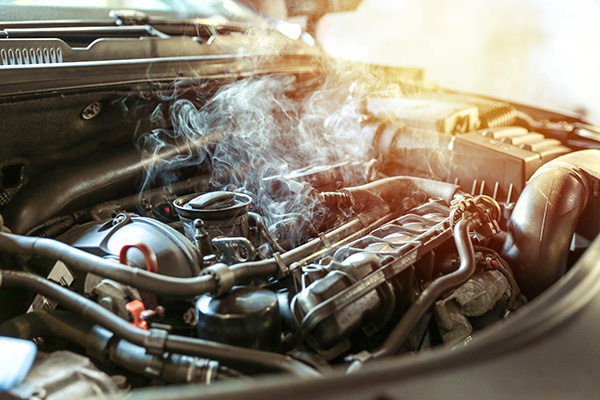
What Causes an Engine to Overheat?
Your engine produces tremendous amounts of heat while operating. The cooling system continuously circulates coolant through the engine and radiator to remove excess heat. If coolant circulation stops or heat cannot be dissipated efficiently, engine temperatures begin to rise.
Whether your vehicle overheats while driving, only in traffic, or immediately after startup helps identify the underlying cause.
Which Best Matches Your Vehicle?
Select Your Overheating Symptom
Choose the condition that best matches your vehicle.
Select one of the overheating conditions above.
Why Is My Engine Running Hot?
Low Coolant Level
The most common cause of engine overheating due to coolant leaks or insufficient coolant.
Coolant Leak
Leaks from hoses, radiators, water pumps, or heater cores reduce coolant volume.
Thermostat Failure
A stuck thermostat prevents coolant from circulating through the radiator.
Water Pump Failure
A worn or leaking water pump cannot properly circulate coolant.
Radiator Restriction
Internal blockage or external debris reduces cooling efficiency.
Cooling Fan Failure
Faulty electric fans commonly cause overheating while stopped or idling.
Radiator Cap Failure
Improper cooling system pressure allows coolant to boil prematurely.
Air Trapped In Cooling System
Air pockets reduce coolant circulation and create hot spots.
Collapsed Radiator Hose
Restricted coolant flow prevents proper engine cooling.
Head Gasket Failure
Internal engine damage may force combustion gases into the cooling system and rapidly increase temperatures.
Different Overheating Conditions Often Point to Different Repairs
Only At Idle
Cooling fan failures or poor radiator airflow are the most common causes.
While Driving
Low coolant, thermostat problems, water pump failures, or radiator restrictions are more likely.
Constant Overheating
Major coolant leaks, severe cooling system failures, or internal engine damage require immediate diagnosis.
Never Continue Driving An Overheating Engine
Temperature Slightly Above Normal
If the temperature gauge begins climbing above its normal operating range, reduce engine load and have the cooling system inspected as soon as possible before overheating becomes severe.
Temperature In The Red Zone
If the temperature gauge reaches the red zone or an engine temperature warning appears, safely pull over and shut the engine off immediately to help prevent serious engine damage.
Steam From Under The Hood
Steam indicates the cooling system has likely exceeded its safe operating temperature. Continuing to drive can result in a blown head gasket, warped cylinder head, or complete engine failure.
Stop Driving Immediately If:
How We Diagnose Engine Overheating
Cooling System Pressure Test
We pressure test the cooling system to locate coolant leaks and verify system integrity.
Coolant Inspection
Coolant level, condition, contamination, and freeze protection are evaluated.
Cooling Component Inspection
The radiator, water pump, thermostat, hoses, radiator cap, expansion tank, and cooling fans are thoroughly inspected.
Engine Temperature Analysis
Live scan tool data is used to monitor coolant temperature, thermostat operation, and cooling fan activation.
Head Gasket Testing
When necessary, we perform combustion gas testing to determine whether a blown head gasket is contributing to overheating.
Repair Verification
After repairs, the cooling system is road tested and monitored to verify proper operating temperature under normal driving conditions.