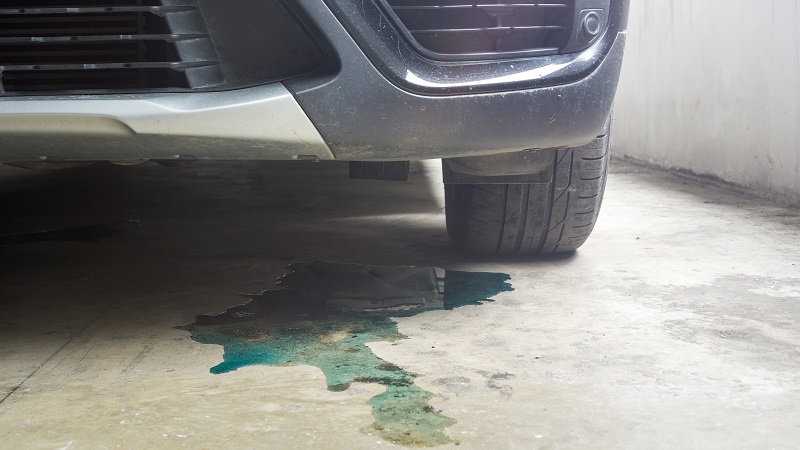
What Causes a Coolant Leak?
Your cooling system operates under pressure and high temperatures, making hoses, seals, and cooling system components susceptible to wear over time. Small leaks often begin gradually before becoming larger and causing noticeable coolant loss or engine overheating.
The location of the leak—whether under the front of the vehicle, inside the cabin, near the water pump, or around the radiator—helps determine which component has failed.
Which Best Matches Your Vehicle?
Select Your Cooling System Symptom
Choose the condition that best matches your vehicle.
Select one of the coolant leak symptoms above.
Why Is Coolant Leaking?
Radiator Leak
Cracked plastic tanks or damaged radiator cores commonly leak coolant.
Radiator Hose Leak
Aging hoses may crack, split, or loosen at the connections.
Water Pump Leak
Failed shaft seals often allow coolant to escape through the pump's weep hole.
Thermostat Housing Leak
Warped housings and deteriorated gaskets frequently develop leaks.
Heater Core Leak
A leaking heater core may create a sweet smell or wet passenger-side carpet.
Coolant Reservoir Crack
Expansion tanks can crack from age and repeated heat cycles.
Radiator Cap Failure
A faulty cap may allow coolant to escape by failing to maintain proper system pressure.
Freeze Plug Leak
Corrosion can damage engine freeze plugs over time.
Head Gasket Failure
Internal coolant leaks may occur without visible coolant on the ground.
Cooling System Gasket Failure
Various seals and gaskets throughout the cooling system may deteriorate with age.
Where the Coolant Appears Can Narrow the Diagnosis
Front of Vehicle
Radiators, hoses, water pumps, and thermostat housings are the most common leak sources.
Inside the Cabin
Wet carpet or a sweet smell often indicates a leaking heater core.
No Visible Leak
Internal engine leaks such as a failed head gasket may allow coolant loss without leaving coolant on the ground.
A Coolant Leak Should Never Be Ignored
Small Coolant Seep
A minor coolant seep may not immediately cause overheating, but coolant levels should be monitored closely. Even a slow leak can eventually leave the cooling system unable to protect your engine.
Active Coolant Leak
If coolant is dripping onto the ground or the coolant reservoir requires frequent refilling, schedule service as soon as possible. Driving with low coolant increases the risk of engine overheating.
Large Leak Or Overheating
If coolant is pouring from the vehicle or the engine temperature gauge begins climbing, stop driving immediately. Severe overheating can damage the head gasket, cylinder head, or engine block.
Schedule Service Immediately If:
How We Diagnose Coolant Leaks
Cooling System Pressure Test
We pressurize the cooling system to accurately locate external and internal coolant leaks.
Coolant Level & Condition Inspection
We inspect coolant level, condition, contamination, and freeze protection to evaluate the health of the cooling system.
Leak Source Inspection
Radiators, hoses, water pumps, heater cores, thermostats, expansion tanks, and hose connections are inspected to identify the exact leak source.
Combustion Leak Testing
If necessary, we test for head gasket failure and combustion gases entering the cooling system.
Cooling System Performance Test
Thermostat operation, radiator fan performance, coolant circulation, and operating temperature are verified.
Repair Verification
After repairs, the cooling system is pressure tested again and road tested to ensure proper operating temperature and leak-free performance.