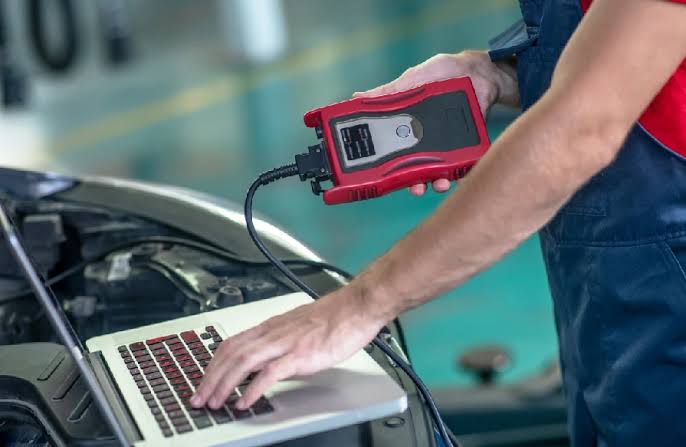
Find the Cause of ABS, Traction Control & Stability Warnings
Your anti-lock braking system helps prevent wheel lockup during hard braking and works closely with traction control and electronic stability control. These systems rely on wheel speed sensors, wiring, tone rings, control modules, hydraulic valves, pumps, and brake system inputs.
When a warning light appears, the vehicle may disable part of the ABS, traction control, or stability system. Standard braking may still function, but advanced safety assistance may be reduced until the cause is diagnosed.
When Should You Schedule ABS Diagnostics?
What Are You Experiencing?
Select the warning or symptom that best matches your vehicle.
Select a warning or symptom above.
What We Test & Diagnose
Wheel Speed Sensors
Sensors are tested for signal quality, contamination, physical damage, incorrect air gap, wiring faults, and communication issues.
Tone Rings & Wheel Bearings
Tone rings, magnetic encoder rings, and wheel bearings are inspected for cracks, corrosion, damage, excessive play, and signal interruption.
ABS Control Module
The control module is checked for stored fault codes, power, ground, communication, and internal electronic concerns.
ABS Pumps, Valves & Brake Control Systems
Hydraulic Control Unit
Pumps and solenoid valves are evaluated for stored codes, electrical faults, hydraulic concerns, and proper operation.
Wiring & Connectors
Wiring is inspected for corrosion, broken conductors, damaged connectors, rubbing, moisture intrusion, and poor terminal contact.
System Voltage
Battery and charging system voltage are checked because low or unstable voltage can trigger multiple electronic brake warnings.
ABS Works With More Than the Brakes
ABS data may also support traction control, electronic stability control, hill-start assist, adaptive cruise control, collision avoidance, electronic parking brakes, and all-wheel-drive systems. A single failed sensor can sometimes trigger several dashboard warnings.
A Fault Code Does Not Always Identify the Failed Part
A diagnostic trouble code identifies the system or circuit where a problem was detected, but testing is still required. For example, a wheel speed sensor code may be caused by damaged wiring, a cracked tone ring, wheel bearing play, corrosion, or a control module issue rather than the sensor itself.
ABS Diagnostics for Most Vehicle Types
What We Inspect, Test & Diagnose
ABS Code Scanning
We retrieve ABS, traction control, stability control, and related electronic brake system fault codes.
Wheel Speed Sensor Testing
Sensors are tested for signal quality, voltage, resistance, contamination, physical damage, and proper operation.
Tone Ring Inspection
Tone rings and magnetic encoder rings are checked for cracks, corrosion, debris, damage, and signal interruptions.
ABS Module Evaluation
We inspect power, ground, network communication, internal faults, and module-related warning conditions.
Hydraulic Unit Testing
Pumps, valves, solenoids, and hydraulic control components are evaluated when fault codes or symptoms point to the unit.
Wiring & Connector Inspection
Wiring is checked for corrosion, damaged insulation, broken conductors, loose terminals, and moisture intrusion.
Battery & Charging Test
System voltage is verified because low or unstable voltage can trigger multiple warning lights and communication faults.
Road Test & Live Data
Live wheel speed and brake system data may be monitored during a road test to confirm intermittent or speed-related faults.
Our ABS Diagnostic Process
1. Warning Review
We review the warning lights, symptoms, recent repairs, battery history, and driving conditions associated with the concern.
2. Computer Scan
We scan the ABS, traction control, stability control, parking brake, and related vehicle modules for fault codes and data.
3. Circuit Testing
Sensors, wiring, power, grounds, tone rings, wheel bearings, and control components are tested as needed.
4. Physical Inspection
Brake components, wheel hubs, connectors, harnesses, hydraulic units, and related systems are inspected for visible damage.
5. Repair Recommendation
We explain the confirmed cause, repair options, safety concerns, and recommended next steps before work begins.
6. Verification
After approved repairs, codes are cleared and system operation is verified through testing and, when appropriate, a road test.
What Can Trigger ABS & Traction Control Warnings?
Sensor & Hub Concerns
Failed wheel speed sensors, damaged encoder rings, loose wheel bearings, corrosion, or debris may interrupt wheel speed signals.
Electrical Faults
Broken wires, poor grounds, corroded connectors, low battery voltage, and network communication faults may trigger warnings.
Hydraulic & Module Faults
ABS pumps, valves, hydraulic control units, or control modules may develop internal electrical or mechanical problems.