What Does Uneven Tire Wear Mean?
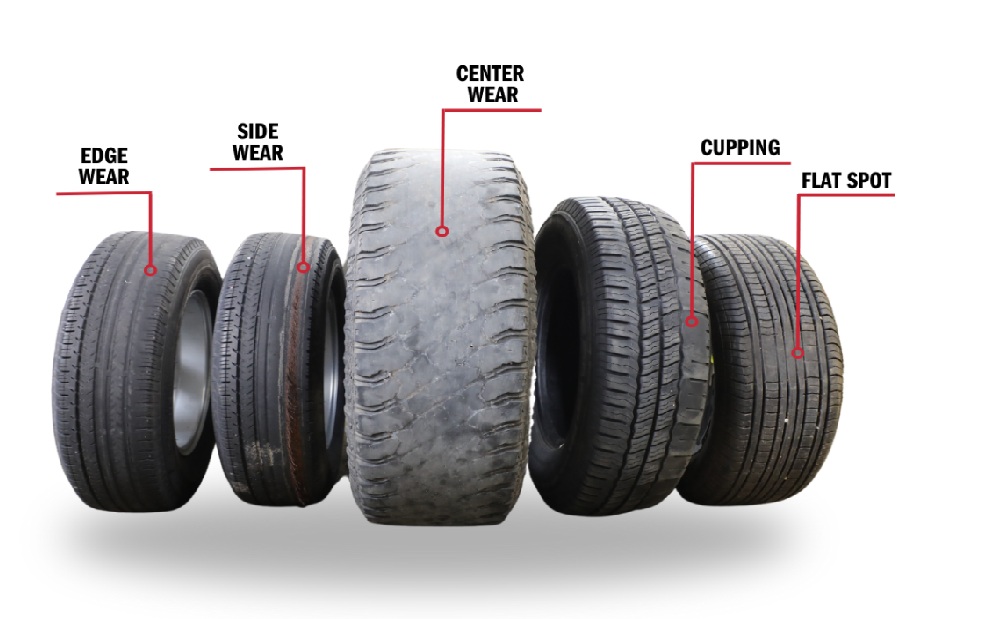
Tires should wear evenly across the tread surface. When one section of the tire wears faster than another, it usually indicates an underlying mechanical issue rather than a problem with the tire itself. Ignoring uneven wear can shorten tire life, reduce traction, increase stopping distance, and affect vehicle stability.
By examining where the tire is wearing, technicians can often narrow down the root cause before beginning additional testing.
Which Tire Wear Pattern Matches Your Vehicle?
Select Your Tire Wear Pattern
Choose the wear pattern that most closely matches your tire.
Select one of the tire wear patterns above.
What Causes Uneven Tire Wear?
Wheel Alignment Problems
Incorrect caster, camber, or toe angles are among the most common causes of abnormal tire wear.
Improper Tire Pressure
Overinflation and underinflation create different tread wear patterns that reduce tire life.
Worn Shocks & Struts
Weak dampers allow the tire to bounce against the road, producing cupping and irregular tread wear.
Wheel Balance Problems
An out-of-balance wheel can contribute to vibration and uneven tread wear over time.
Worn Suspension Components
Ball joints, bushings, and control arms affect tire contact with the road surface.
Worn Tie Rod Ends
Loose steering linkage changes alignment while driving and accelerates tire wear.
Wheel Bearing Wear
Loose wheel bearings may allow unwanted wheel movement that contributes to abnormal wear.
Lack of Tire Rotation
Failing to rotate tires regularly often causes front and rear tires to wear at different rates.
Damaged Tire
Internal belt separation or manufacturing defects can create unusual tread wear patterns.
Aggressive Driving
Hard cornering, rapid acceleration, and frequent heavy braking may increase tire wear.
Different Wear Patterns Often Point to Different Problems
Inside Edge Wear
Frequently caused by excessive negative camber, worn suspension components, or incorrect alignment settings.
Center Tread Wear
Usually indicates tire overinflation, causing the center of the tread to carry more of the vehicle's weight.
Cupping or Scalloping
Often caused by worn shocks, worn struts, suspension problems, or wheel balance issues.
The Location and Shape of Wear Help Identify the Cause
Both Outer Edges Worn
Wear along both shoulders commonly indicates underinflation. Low tire pressure causes the outer portions of the tread to carry more of the vehicle's weight.
Feathered Tread
Tread blocks that feel smooth in one direction and sharp in the other often indicate incorrect toe alignment or worn steering components.
One Tire Wearing Faster
A single tire wearing faster than the others may indicate a localized alignment problem, damaged suspension component, brake drag, tire defect, or lack of rotation.
Uneven Tire Wear Can Reduce Traction and Vehicle Stability
Minor Early Wear
Slight uneven wear may not require immediate tire replacement, but the underlying tire pressure, alignment, balance, steering, or suspension issue should be inspected promptly.
Moderate or Rapid Wear
Continued driving may permanently damage the tire, reduce wet traction, increase road noise, and shorten the usable life of the entire tire set.
Cords, Bulges, or Severe Damage
Do not continue driving when tire cords are visible, the tread is separating, a sidewall bulge is present, or the tire has developed severe cupping or bald areas.
Stop Driving and Seek Service If:
How We Diagnose Uneven Tire Wear
Tread Pattern Inspection
We inspect the inner edge, outer shoulder, center tread, tread blocks, and overall wear depth to identify the type and severity of the abnormal wear pattern.
Tire Pressure Check
Each tire is checked against the vehicle manufacturer's recommended inflation pressure to identify overinflation, underinflation, or pressure differences.
Tire & Wheel Evaluation
Tires are inspected for belt separation, sidewall damage, mismatched sizing, improper mounting, wheel damage, and balance problems.
Wheel Alignment Measurement
Camber, caster, and toe are measured to determine whether incorrect wheel alignment is causing inside-edge wear, feathering, or rapid tread loss.
Steering & Suspension Inspection
Tie rods, ball joints, control arms, bushings, wheel bearings, shocks, struts, and related components are checked for wear, looseness, or damage.
Repair & Wear Prevention Plan
We explain the cause of the wear and recommend the appropriate repair, alignment, rotation, balancing, inflation correction, or tire replacement.