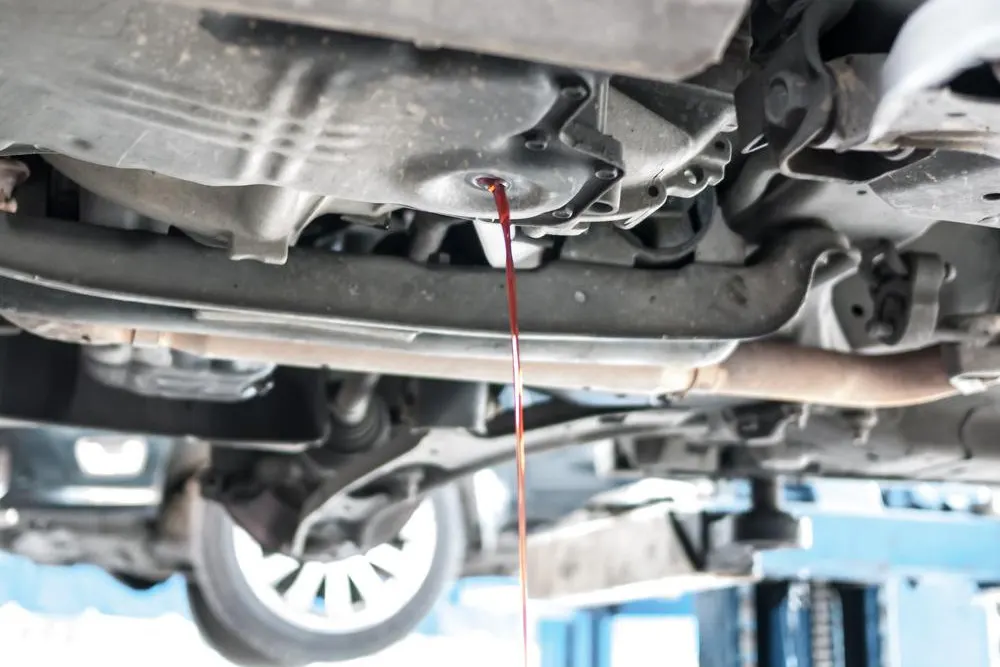
What Causes a Transmission Leak?
Transmission leaks often develop as rubber seals harden with age, metal components expand and contract from heat, or road debris damages transmission cooling lines. While some leaks are minor, others can allow fluid levels to drop rapidly and should be repaired immediately.
Since automatic transmissions rely on hydraulic fluid pressure to operate correctly, even a moderate leak can lead to shifting problems, slipping, overheating, or complete transmission failure.
Which Symptoms Match Your Vehicle?
Select the Symptom That Best Matches Your Vehicle
Choose the condition that most closely matches what you're experiencing.
Select one of the transmission leak symptoms above.
Components That Frequently Leak Transmission Fluid
Transmission Pan Gasket
Aging or damaged pan gaskets are among the most common causes of transmission fluid leaks.
Transmission Cooler Lines
Corrosion, impact damage, or worn fittings may allow fluid to escape from transmission cooling lines.
Axle Seals
Worn axle shaft seals can leak where the CV axles enter the transmission housing.
Input or Output Shaft Seals
Rotating shaft seals eventually wear and begin leaking after years of normal use.
Transmission Pan Damage
Road debris or impacts can dent or crack the transmission pan, causing fluid loss.
Drain Plug Leak
Improperly tightened or damaged drain plugs may slowly leak transmission fluid.
Front Pump Seal
A worn front pump seal can leak where the transmission connects to the engine.
Transmission Case Damage
Cracks or impact damage to the transmission housing can result in significant fluid leaks.
Overfilled Transmission
Excess fluid may be forced out through vents or seals, especially as temperatures rise.
Normal Seal Wear
Rubber seals naturally harden and shrink over time, increasing the likelihood of leaks.
Fluid Location Can Help Identify the Source
Front of Transmission
May indicate a front pump seal, transmission cooler line, or connection leak.
Transmission Pan Area
Often caused by a damaged pan gasket, loose pan bolts, or a cracked transmission pan.
Near the Axles
Frequently points toward worn axle seals where the CV axles enter the transmission.
Fluid Color, Texture, and Location Can Help Identify the Leak
Transmission Fluid Leak
Transmission fluid is commonly red, pink, or reddish-brown and may feel thinner than engine oil. It often appears beneath the front-center or middle of the vehicle.
Engine Oil Leak
Engine oil is usually amber, brown, or black and has a thicker, slick texture. It often collects beneath the engine or toward the front of the vehicle.
Coolant Leak
Coolant may be green, orange, yellow, pink, blue, or purple and often has a sweet odor. It may collect near the radiator, engine, water pump, or heater hoses.
Driving With a Transmission Leak Can Cause Serious Damage
Small Leak With No Symptoms
A small leak may not immediately affect drivability, but fluid loss can increase quickly. Schedule an inspection before the level becomes low enough to damage the transmission.
Slipping or Delayed Engagement
Slipping, delayed shifting, or hesitation when selecting drive or reverse may indicate low fluid pressure. Limit driving and arrange service promptly.
Large Leak or No Vehicle Movement
A large puddle, severe shifting problems, overheating, or a vehicle that will not move may indicate substantial fluid loss. Stop driving and have the vehicle inspected immediately.
Stop Driving or Arrange Prompt Inspection If:
How We Diagnose a Transmission Leak
Fluid Identification
We confirm whether the leaking fluid is transmission fluid, engine oil, coolant, power steering fluid, or another vehicle fluid.
Fluid Level & Condition Check
The transmission fluid level, color, odor, and condition are inspected for signs of overheating, contamination, or internal wear.
Visual Leak Inspection
The transmission pan, gasket, cooler lines, seals, drain plug, case, axle openings, and surrounding components are inspected.
Cleaning & Leak Tracing
When necessary, the affected area is cleaned so fresh fluid can be traced back to the exact source of the leak.
Road Test & Shift Evaluation
We evaluate engagement, shifting, slipping, hesitation, noise, and operating temperature when the vehicle can be safely driven.
Repair Verification
After repairs are completed, the fluid level is corrected and the transmission is rechecked to confirm the leak has stopped.