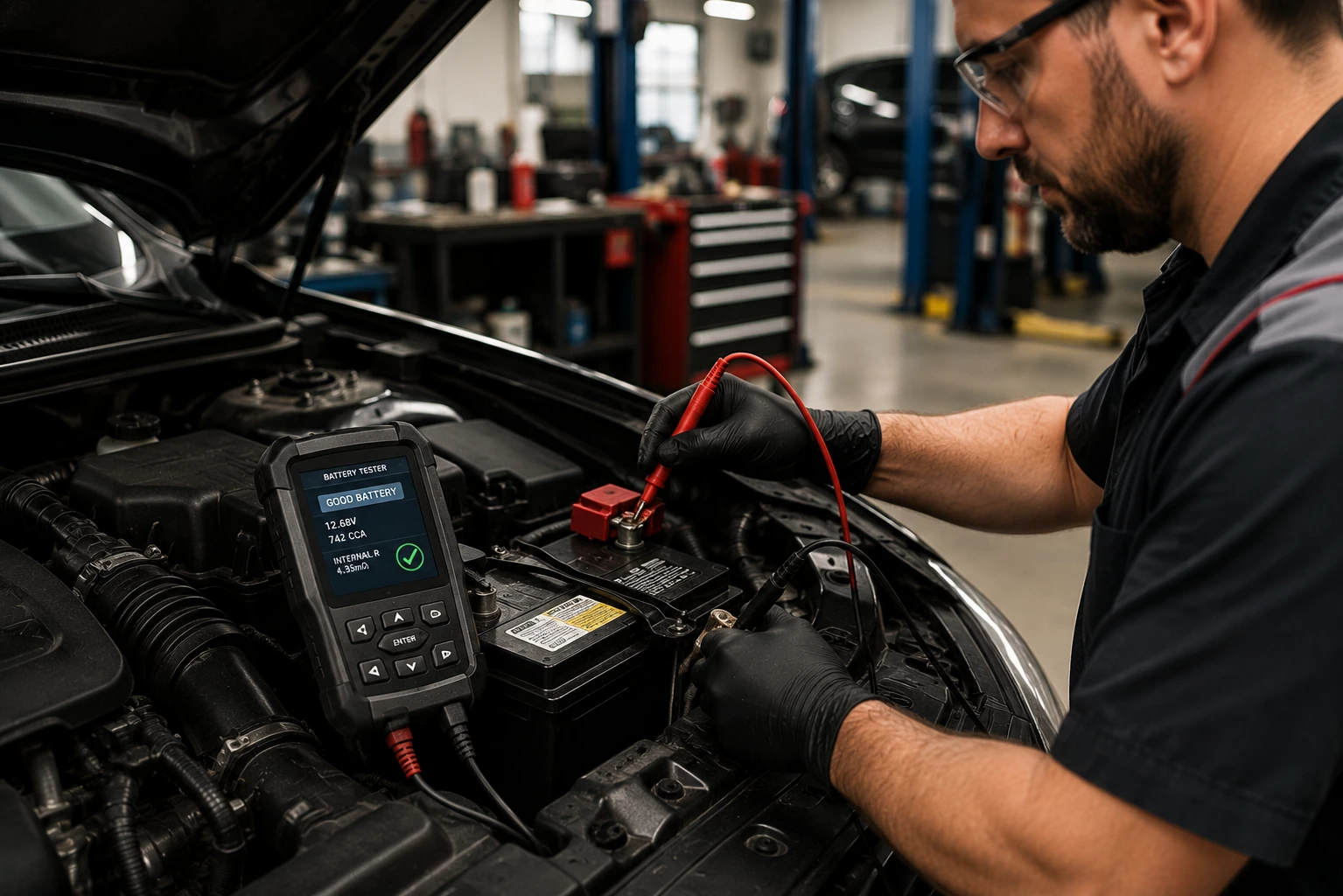
A Dead Battery Does Not Always Mean the Battery Is Bad
A weak or failed battery is one possible cause of repeated starting problems, but replacing the battery without testing the complete starting and charging system may not solve the issue.
If your battery keeps dying overnight, after a few days of sitting, during cold weather, or shortly after replacement, the vehicle may have an electrical drain, charging-system fault, poor connection, damaged cable, or another underlying problem.
Our technicians can test the battery, alternator, starter, cables, electrical connections, and key vehicle systems to identify why the battery is losing power.
What is your vehicle doing?
Select the symptom that most closely matches your battery or starting problem.
Select the symptom that best matches your vehicle.
Why a Car Battery Keeps Losing Power
Weak or Aging Battery
Batteries lose capacity with age, repeated discharge, extreme temperatures, vibration, internal damage, and long periods of inactivity.
Alternator Problems
A weak or failed alternator may not restore the battery’s charge while the engine is running, causing the battery to gradually lose power.
Parasitic Electrical Draw
A component that continues using electricity after the vehicle is turned off can drain the battery over several hours or days.
Problems That Can Drain or Weaken the Battery
Corroded Terminals
Corrosion can restrict electrical flow between the battery and the vehicle’s starting and charging systems.
Loose Battery Cables
Loose, damaged, or poorly connected cables can prevent proper charging and create intermittent starting problems.
Faulty Starter
A worn starter or solenoid can draw excessive current or create symptoms that resemble a weak battery.
Interior Light Staying On
Glove-box, trunk, cargo, vanity, or dome lights can remain on unnoticed and slowly discharge the battery.
Aftermarket Electronics
Dash cameras, alarms, stereos, remote starters, tracking systems, and chargers can create excessive key-off power draw.
Faulty Relay or Module
A relay or electronic module may fail to shut down when the vehicle is parked, allowing continued battery drain.
Short Driving Trips
Repeated short trips may not give the alternator enough time to restore the energy used during engine starting.
Extreme Temperatures
Very hot or cold weather can reduce battery performance and expose an already weakened battery.
How Can You Tell Which One Is Failing?
Signs of a Weak Battery
Slow cranking, clicking during startup, dim lights before the engine starts, swelling, leakage, age-related failure, or repeated loss of charge.
Signs of an Alternator Problem
Battery warning light, dimming lights while driving, electrical accessories behaving strangely, engine stalling, or the battery dying soon after a jump-start.
Why Testing Matters
Battery and alternator symptoms often overlap. Proper voltage, load, output, connection, and current-draw testing helps identify the true cause.
How We Diagnose a Battery That Keeps Dying
1. Battery Inspection & Testing
We inspect the battery case, terminals, cables, mounting, voltage, charge level, and available starting capacity.
2. Starting & Charging Tests
We evaluate starter operation, alternator output, charging voltage, voltage drop, cable condition, and electrical connections.
3. Electrical-Drain Testing
When needed, we measure key-off current draw and isolate the circuit, accessory, relay, wiring fault, or module consuming excessive power.
Typical Battery & Electrical Service Pricing
Final pricing depends on the vehicle, battery type, diagnostic time, charging-system condition, electrical complexity, and replacement parts required.
Schedule Battery Testing If You Notice
Do Not Ignore Repeated Battery Failure
A vehicle that repeatedly loses electrical power may fail to start without warning. A charging-system problem can also cause the vehicle to stall while driving or affect safety-related electrical systems.
If the battery warning light comes on while driving, electrical systems begin shutting down, or the engine stalls, move to a safe location and contact a repair professional.